
SEMI Standard Chiller
HRZ recirculating chillers are especially suited for high technology sectors, by conforming to several SEMI equipment standards and regulating fluid temperature to ±0.1°C. Inverters control the rotations of both the pump and compressor for energy efficiency. Refrigerants include R454C (EU and US compliant beyond 2025), and CO2. HRZ chillers can circulate various coolants including fluorinated types (Fluorinert™ and GALDEN®), ethylene glycol and water.
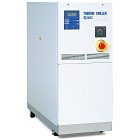
HRZF010, SEMI Standard Double Inverter Chiller, R454C Refrigerant
The HRZF010 is a high-performance, water-cooled refrigerated thermo-chiller designed for the most demanding technical environments on the planet, including semiconductor fabrication facilities which are strictly controlled environments. Its double inverter allows the chiller to maintain +/- 0.1°C stability and speeds up or slows down the motors to match the exact cooling load, potentially reducing energy consumption by up to 65%.
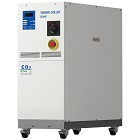

HRZC, SEMI Standard Double Inverter Chiller, CO2 Refrigerant
The HRZC is a water-cooled recirculating chiller for high technology sectors which employs CO₂ as a new refrigerant. It is a pinnacle of green semiconductor technology and balances extreme precision with strict environmental mandates. The HRZC is a high-precision chiller paired with a Double Inverter system for the compressor and pump.
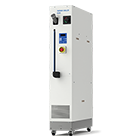
INR-495 Thermo-Chillers with CO2 Refrigerant
The INR-495-042/043 thermo chiller is a highly specialized recirculating chiller that represents the next generation of environmental compliance in semiconductor manufacturing. Larger than the HRZC and HRZF, the INR-495 has been engineered to match the specs and legacy footprint of older, high-GWP chillers that need to be replaced. Because CO2 is non-toxic and non-flammable, the INR-495 can be transported by air when a replacement chiller is needed quickly.
SEMI Chiller Comparison Table
|
Feature |
HRZC |
HRZF |
INR-495 |
|
Refrigerant |
CO2 (R744) |
R454C |
CO2 (R744) |
|
Cooling Capacity |
2kW - 10kW |
2kW - 10kW |
Up to 10kW (High Flow) |
|
Air Transport |
Yes |
No (A2L Gas) |
Yes |
|
Typical Use |
New Installations |
EU/US Compliance |
OEM Tool Replacement (Lam/AMAT) |
|
Temperature Range |
-20 to 90°C |
-10 to 90°C or 10 to 60°C |
-20 to 70 °C |
|
Temperature Stability |
±0.1°C |
±0.1°C |
±1.0 °C |
What are the SEMI S2 and S8 standards?
SEMI standards are developed by Semiconductor Equipment and Materials International, a global trade association. There are over 1,000 standards covering everything from wafer dimensions to software protocols, but the S-Series guidelines are the most critical for these chillers.
SEMI S2: Safety Guidelines
This is the baseline environmental, health, and safety requirement. If a machine doesn't meet S2, most major chip factories will not allow it on their floor. It covers electrical safety, mechanical hazards, seismic protections, and chemical and gas handling.
-
Protection against shocks and proper grounding
-
Shielding for moving parts and emergency stop placement
-
Requirements for the machine to remain stable during an earthquake
-
Ensuring the machine won't leak toxic or flammable substances
SEMI S8: Ergonomics
This standard ensures that a human can actually operate and maintain the machine safely without getting injured. It covers:
-
How high a screen can be or how deep a technician has to reach to fix a part.
-
Standardized symbols for "Caution," "High Voltage," or "Hot Surface."
-
How heavy a replaceable part can be before it requires two people or a crane to lift.